
Buying guide · reviewed 21 October 2026
Buying with CNFans: product details, label checks and the warehouse decision
A standard number, size notation or certification logo can help you ask better questions, but none of those marks replaces the buying process. Start with an identifiable product and specification, retain the seller’s claims, and use the warehouse stage to check visible details of the unit received. Laboratory performance and genuine certification require different evidence.
Prepare and pay for the purchase
Find the product and save its stated details
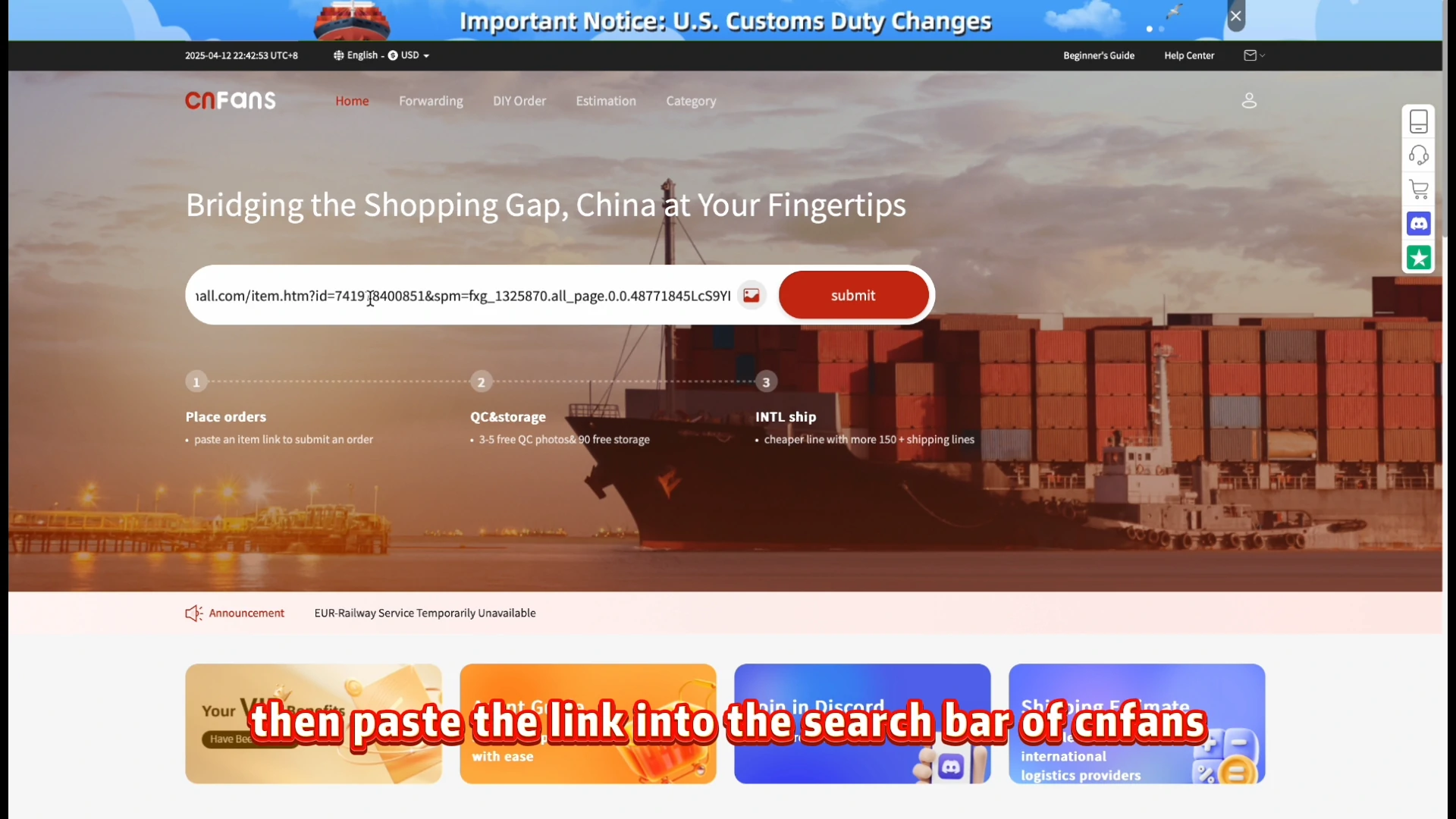
Open a catalog result and locate the seller’s original product page. Save its link, variant and any material, size or label claim that matters to your decision. Paste the item URL into the agent’s search when ordering is available. A certification mark visible in a generic gallery is not evidence that every variant on the listing has the same certificate.
Choose the garment rather than just the label name
Select the exact size, color, model and quantity. A printed body-size code is not automatically a finished-garment measurement, and a shared photo can belong to another variant. Compare the confirmation record with the seller’s menu before submitting. Where an important declaration is absent or unreadable, ask about it rather than supplying your own assumption in the order.
Review goods and domestic delivery charges
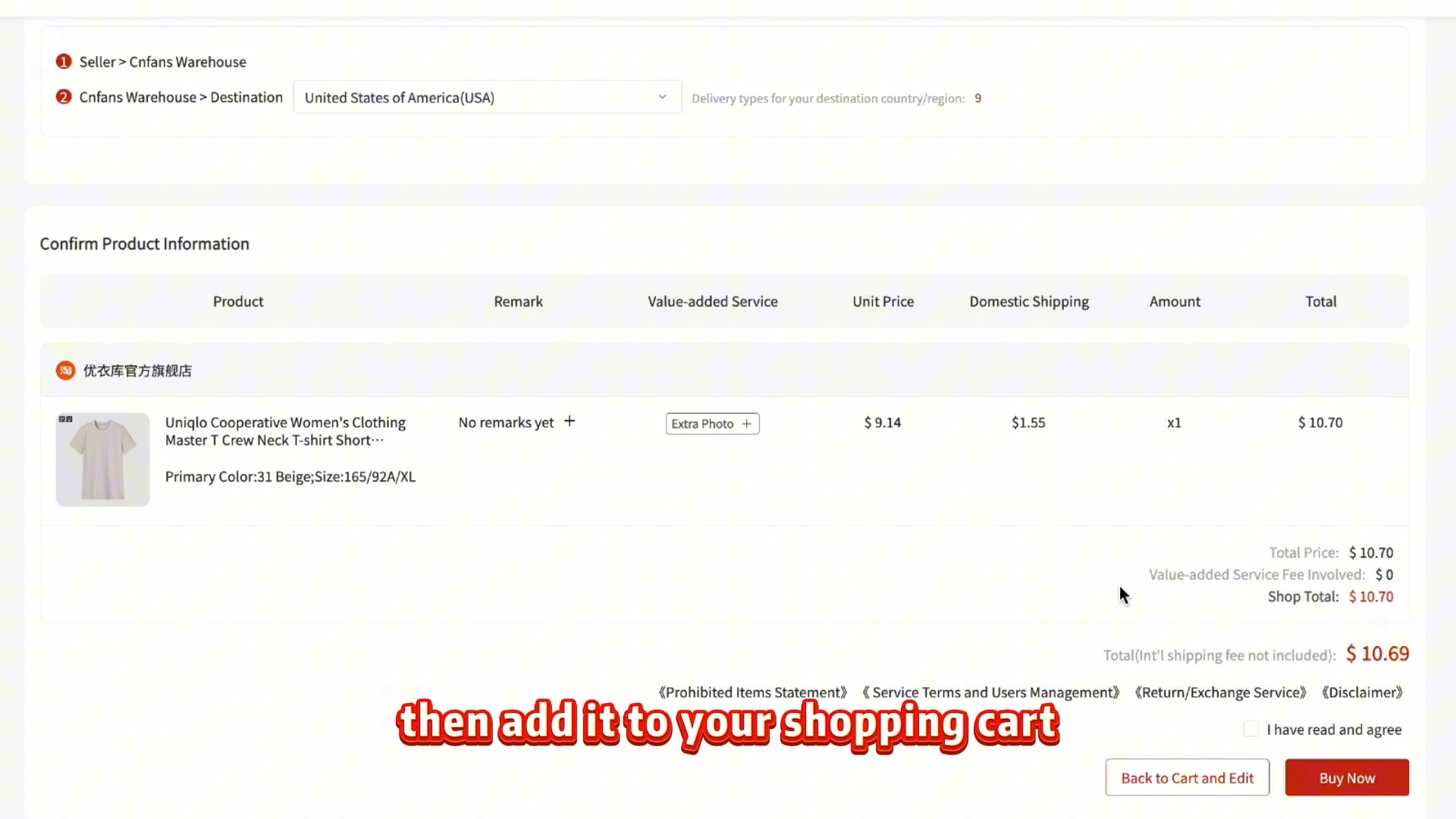
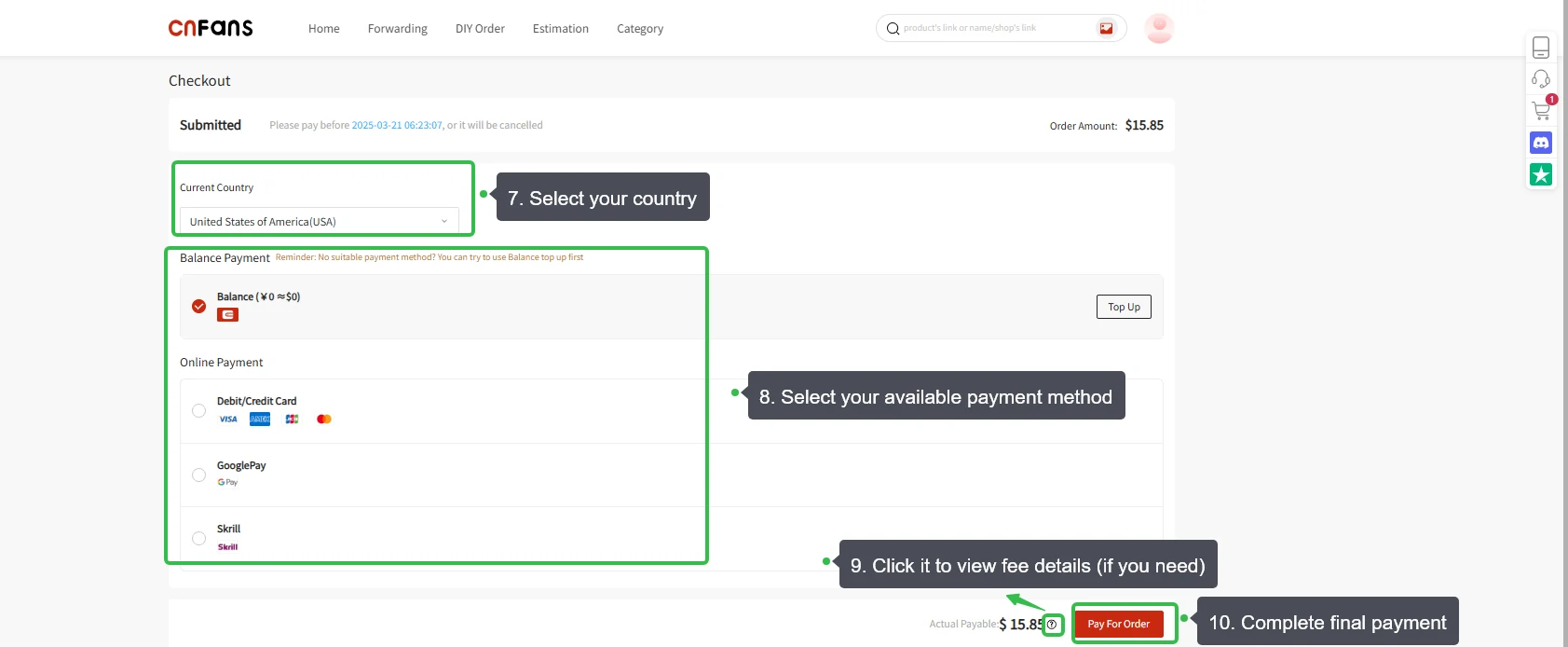
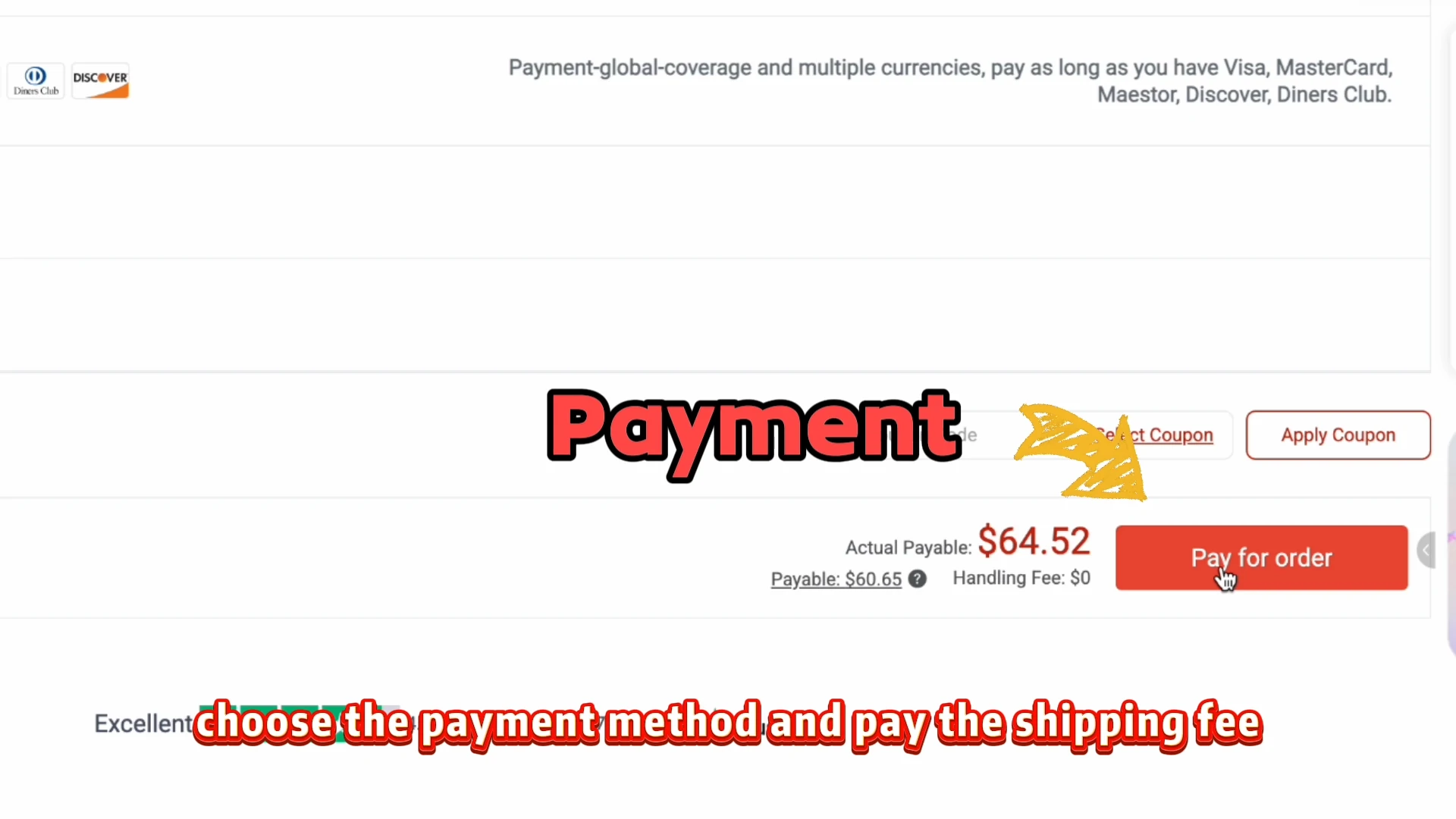
Check the item subtotal, seller-to-warehouse delivery and applicable checkout charges. International freight remains a later transaction. If you request an extra photograph or measurement, verify whether it is offered and what it costs before relying on it. The illustrated payment methods and amounts are historical examples, not current service terms.
Purchase and warehouse
Confirm purchase status and unresolved questions
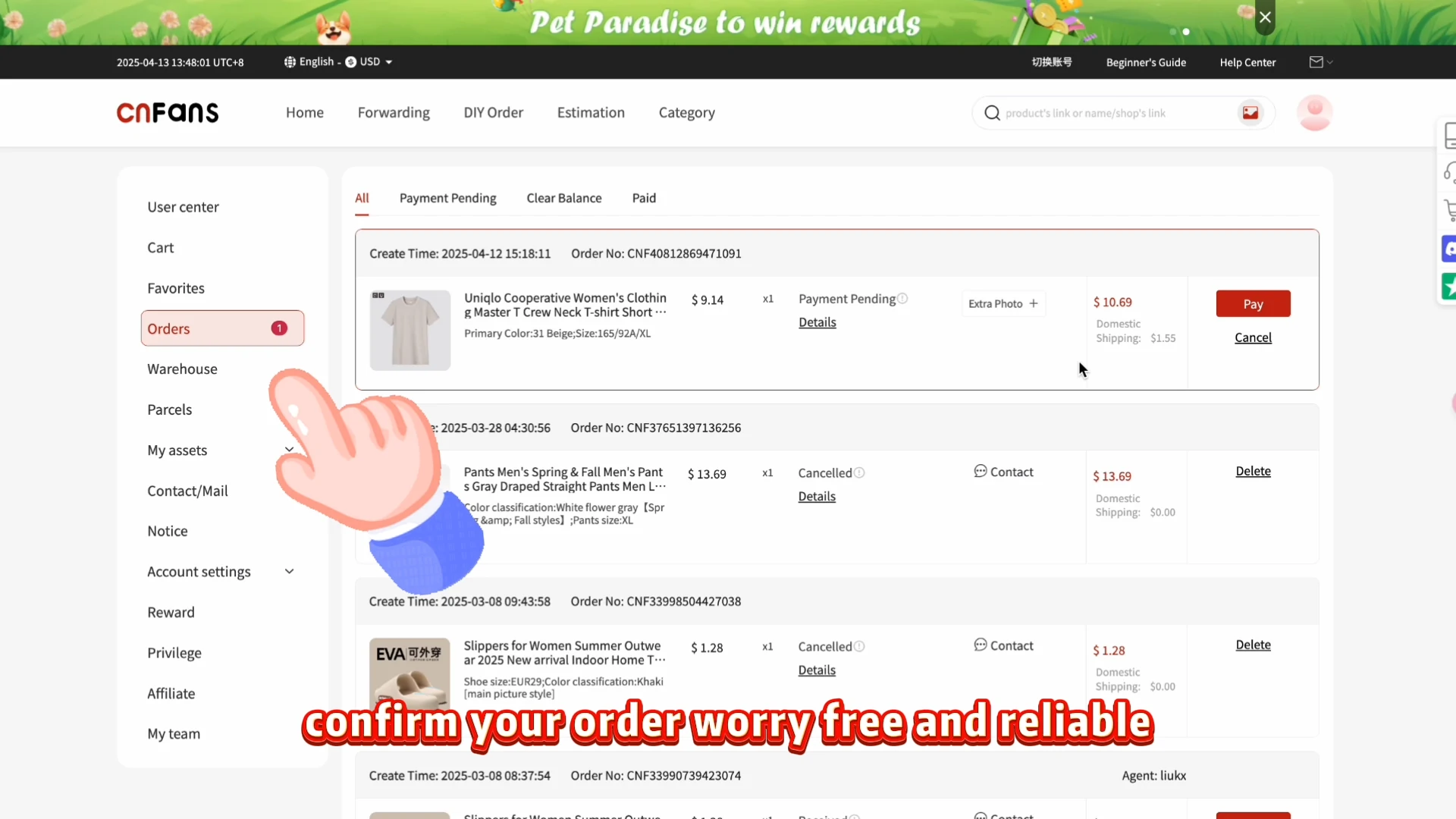
The agent still needs to accept the paid request and buy the selected goods. Read questions about unavailable sizes, changed prices or unsupported items before responding. Keep any seller answer about a label with the order record. The old Orders screenshot shows how statuses are presented, including pending and cancelled examples; it does not prove the agent completed a particular purchase.
Wait for domestic dispatch and warehouse receipt
The purchased item travels from its seller to the Chinese warehouse. Follow that domestic shipment independently of the later international parcel. Receipt and processing take place before the warehouse evidence becomes useful. If the order stalls, identify the item and status when asking for help instead of sending only a generic label illustration.
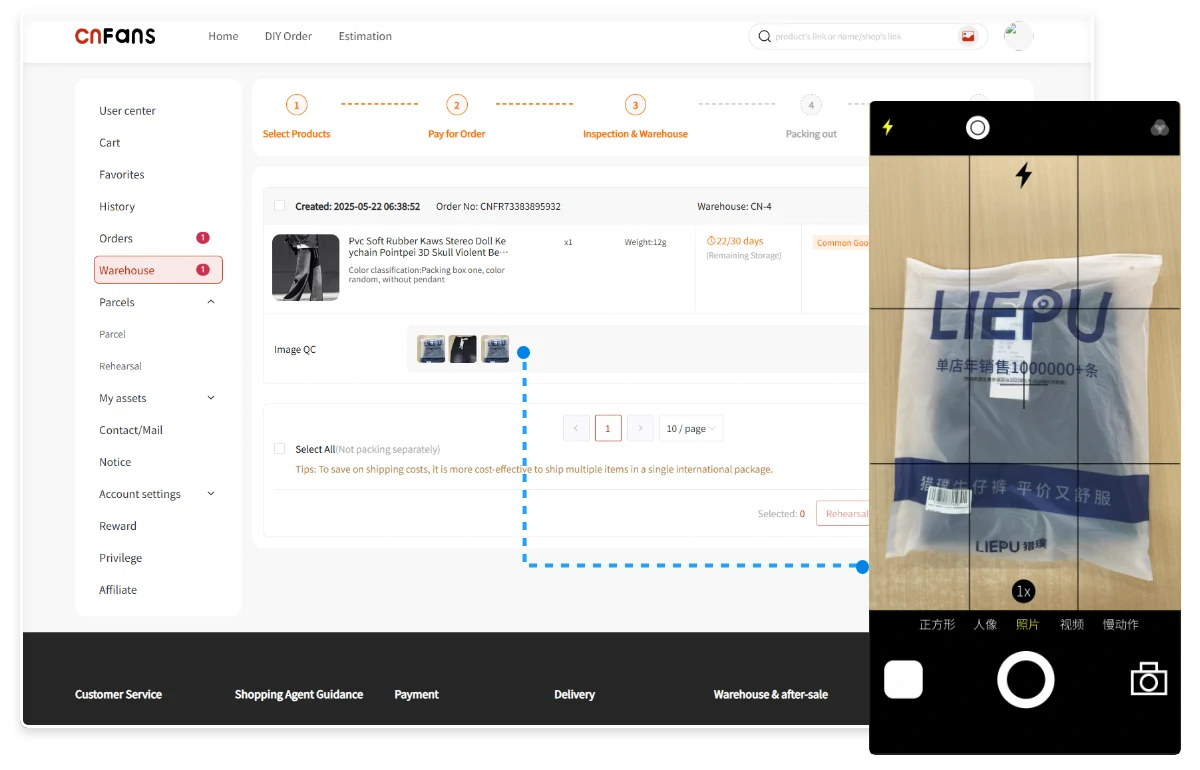
Read the actual label and visible condition
Check the visible size code, care strip, product identification and any relevant declaration against the listing. Request a readable close-up when the label matters to the purchase and the standard photo is too small. A correct-looking tag does not prove laboratory compliance, genuine certification or authenticity. The pictured Warehouse/QC screen illustrates the evidence location, not an approved product.
International parcel
Resolve disagreements before parcel submission
If the item or label differs from the agreed specification, ask what correction or after-sale option is available before including it in an international parcel. Return eligibility, deadlines and charges depend on the order and current terms; no automatic refund is assumed. Read storage warnings too. The historical selection example includes Expired and should not be copied without resolving that status.
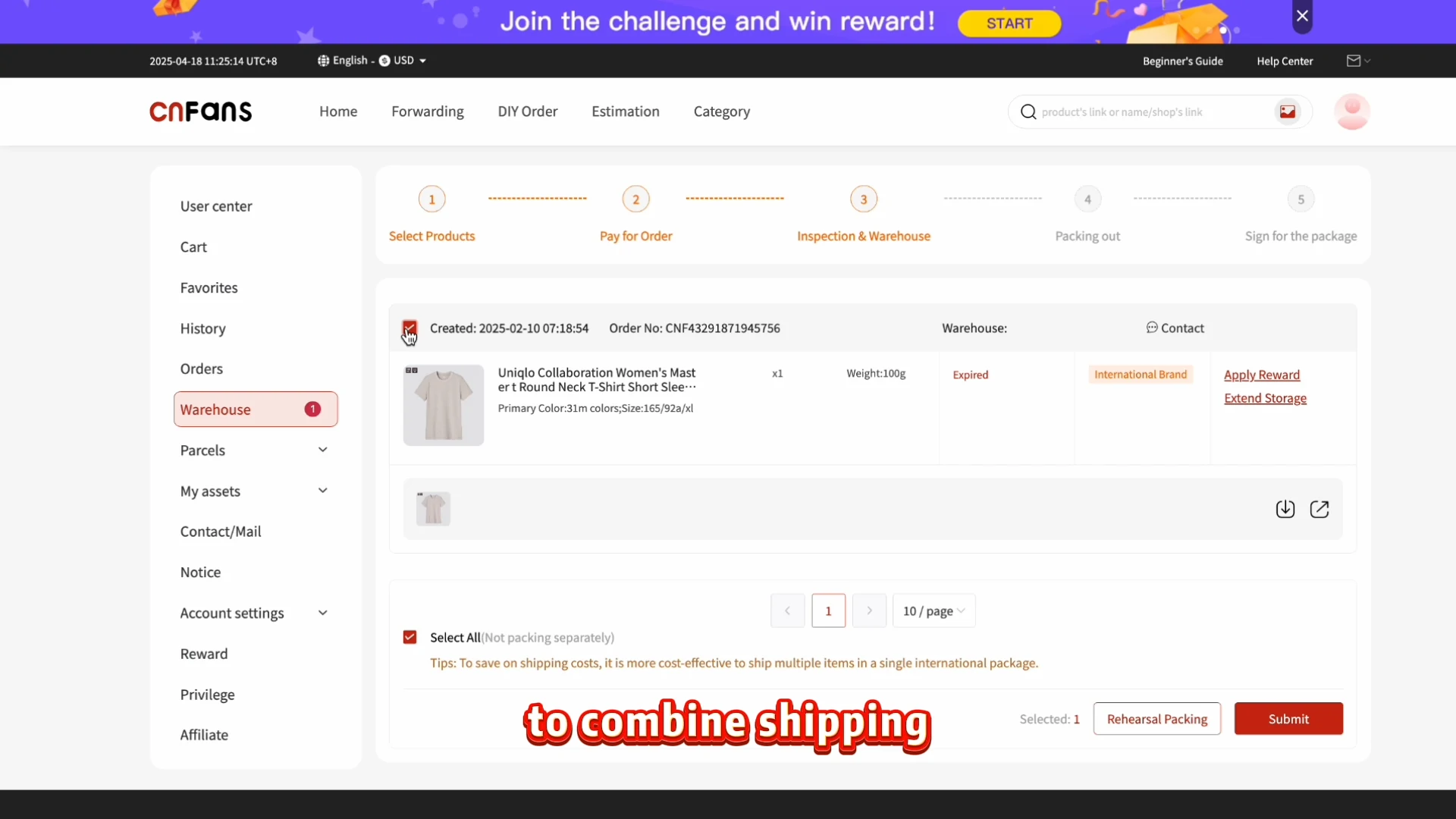
Assess the shipping offer for the actual contents
Compare routes that accept the actual item type and destination, including any packing requirements. A label standard is not a shipping approval. Check chargeable weight, the quoted total and the carrier/service conditions shown for the parcel, then complete freight payment. Historic amounts in the tutorial do not establish today’s shipping cost.
Check the received goods and retain the evidence
Wait for dispatch and carrier collection, then follow tracking. When the parcel arrives, compare the physical item, packaging and labels with the saved order and warehouse evidence. Preserve photographs and references for any discrepancy. If a claim requires proof beyond appearance, a photo comparison remains insufficient; use the relevant authoritative register or competent testing route.
Watch the historical official tutorial
The video shows the interface of its time. Its prices, payment options, promotions and storage wording are historical examples, not current terms.
Open the video player
If the video does not load, follow the nine illustrated steps in this guide. They cover the complete workflow without depending on the player.
Questions before starting
Does a Spreadsheet sell the item?
It is a discovery catalog and guide. The seller supplies the listing and variant; the agent handles a purchase request when its service is available.
Does the first payment include international shipping?
Not in the documented historical workflow. Goods and domestic delivery are handled first; international freight is quoted and paid after the warehouse stage.
Does a QC photograph approve the product?
No. It shows visible evidence to compare with your chosen variant. Missing details need a specific question, and a photograph cannot prove every quality or authenticity claim.
Can I order while the site shows a maintenance notice?
This guide does not establish an available checkout. It documents the historical process; verify the current official service before paying.
What this Spreadsheet helps you decide
The label articles explain how to read a printed declaration. The buying guide explains when to save it, when to request a readable label photograph and what to do if the warehouse item tells a different story.
- Read the label set
- Look up a standard number
- Check certification claims
- Request a useful label photograph
Current listing details and order messages take priority over an old screenshot. Use the detailed guide and help pages for costs, QC questions, shipping and the decisions that need a response from the agent. Help and questions.
A label is a claim to investigate, not the whole product
This Spreadsheet connects product discovery with questions about labels. The catalog is a set of links; the agent is the intermediary handling a purchase and warehouse record. Neither a category photograph nor the Declaration stack certifies a product. The tool explains entered wording and cannot authenticate a certificate, test a sample or decide whether a product meets the law.
| Evidence | Useful for | Does not establish |
|---|---|---|
| Listing and selected option | What the seller represented and which variant you requested | That the delivered unit carries the same label. |
| Readable warehouse label | The wording printed on the photographed unit | That its material or safety declaration is true. |
| Scheme or standard record | What the referenced document or certificate covers | That every product carrying a similar logo is covered. |
| Relevant test report | The named sample, method, date and measured result | An untested batch or a guarantee of all future use. |
Make a mismatch precise before requesting a remedy
Save the original title, option, label image and seller’s answer. When QC arrives, match the item reference first. A clear tag on somebody else’s order is not evidence about yours. Ask for an unfolded label, legible number and any measurement needed to distinguish a wrong variant from an unsuitable fit. Check whether the requested view is available and chargeable.
Where the photo is inconclusive, state what cannot be read. Do not convert an unreadable tag into a finding of non-compliance. GL/RL shorthand does not determine a return; ask which process, deadline and transport cost applies before accepting the item or authorising dispatch.
Track payments and custody separately
The first checkout concerns the purchase request: goods, seller delivery and any stated service or payment charges. The second concerns the international parcel. Record currency conversion, optional inspection or packing and destination charges where applicable so an apparently cheap item does not absorb the whole budget later. Use the actual payable currency and amount.
Payment confirmation, seller purchase, domestic dispatch, warehouse registration and parcel eligibility are distinct states. A failed QC image can be a display problem, not a missing item. Keep the order reference, exact status and time, and ask the verified support channel whether the images exist and what action is required.
Before shipping, confirm storage and return dates independently, then the included items, packing and route restrictions. Ask how the route calculates billable weight from packed weight and dimensions. For a refund, identify the missing event: return decision, platform credit, withdrawal or external settlement; no standard number on a garment answers that financial question.
Use standards carefully when choosing a find or an agent
For a seller, look for an identifiable listing, readable label images, measurements and a response to a specific discrepancy. For a Spreadsheet, look for dated sources, links to fuller explanations and honest distinctions between declarations and tests. Label Stack is useful for forming those questions; it does not approve goods for import or replace product-specific advice.
Compare an agent’s current service, supported goods, fee breakdown, warehouse terms and dispute channel. CNFans’ archived workflow offers a way to buy and consolidate; it does not establish present checkout availability. Other agents, including Superbuy and CSSBuy, need the same current checks rather than a ranking based on old posts.
Use the current official domain for service announcements and order contact. The Reddit cases above were reviewed on 22 October 2026, concern individual reports and do not verify policy, support identity or a success rate. No authenticated Discord comments are used. Standards discussed on this site must be read with their cited version and date; check a current issuing-body record before relying on a requirement.